
Running a Sex Offender Check in Nassau County
The Florida Sexual Offender/Predator Registry is the primary public channel for Nassau County. FDLE compiles reports from law enforcement, corrections, highway-safety records, and registrants. NCSO handles local registration, while FDLE publishes the statewide search. Search FDLE first, then contact NCSO or the state bureau when a status, address, or identity detail needs review.
A registry result supports community awareness. It does not predict conduct, assign a risk score, or reproduce a complete criminal history. Details can change quickly. Match a likely entry through several fields, read the address-source date, and never infer identity from a name alone.
Official channels serve different jobs. NCSO receives local registration information and checks compliance in Nassau County. FDLE gathers and publishes the statewide record. Corrections, highway-safety systems, and law-enforcement agencies supply parts of the underlying data. The national portal adds other states but does not control a Florida entry. Send an incorrect-profile question to FDLE and suspected noncompliance to law enforcement.
Nassau County Search Without Names
Select Nassau in the county field with the name boxes blank to review the jurisdiction as a whole. Searchers may then narrow by designation or status. The state also offers public county data. This broad method is useful for neighborhood awareness without guessing a person's name.
The FDLE registry landing screen presents the official terms and entry point.
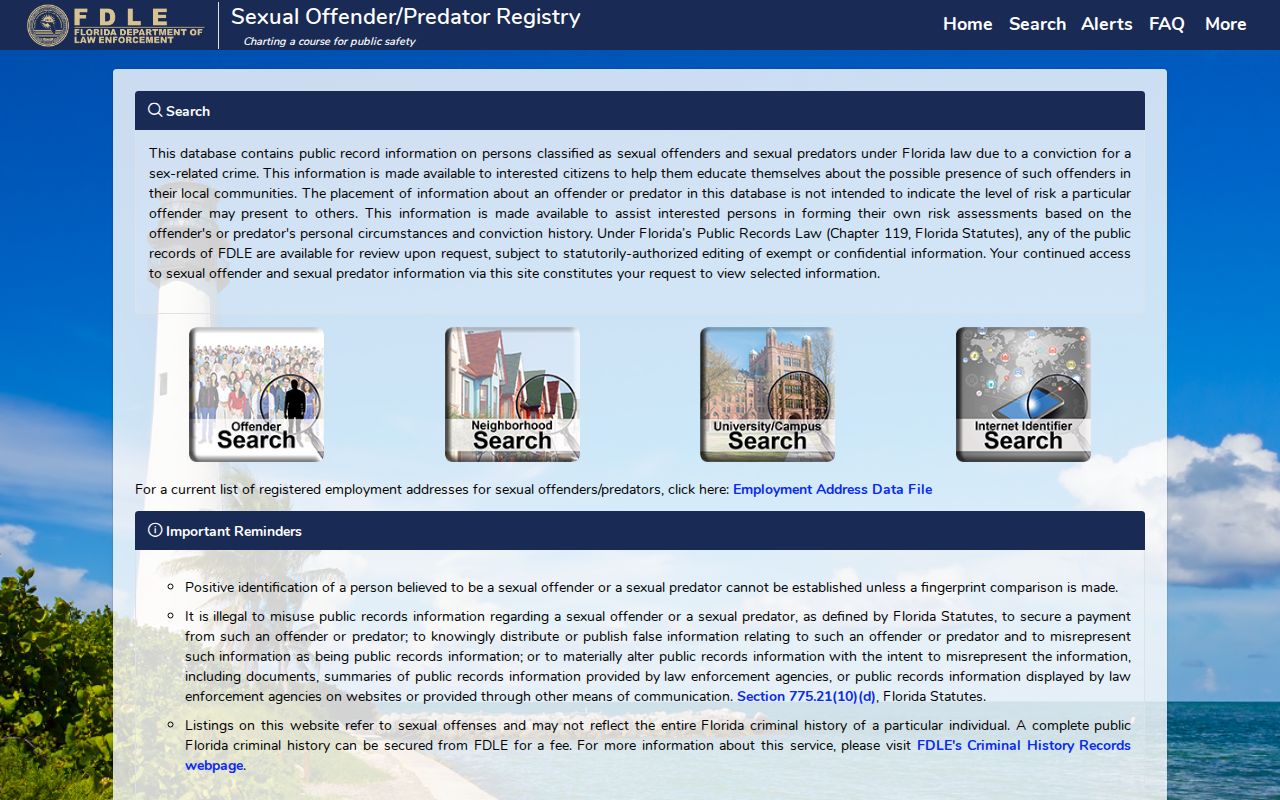
Use the live state page because controls and public records can change after a screenshot is made.
Searching the Florida Sexual Offender/Predator Registry
Begin with an official name or location search. Partial first and last names are accepted. Add aliases when needed. A Nassau County filter, city, or ZIP code can reduce unrelated matches. Open the profile, compare physical and biographical details, note the designation and status, and read the source of the displayed address.
- Open the FDLE registry and read its accuracy and misuse notices.
- Search by name, city, Nassau County, ZIP code, or neighborhood address.
- Review the list and compare several identifiers before selecting a result.
- Open the profile and read status, address source, offense, and update details.
| Field Label | Type | Required | Notes |
|---|---|---|---|
| Last name | Text | One basic field | Partial names accepted. |
| First name | Text | One basic field | Partial names accepted. |
| City or ZIP | Text | Optional | A blank name can return location results. |
| County | Select | Optional | Select Nassau for a county-wide list. |
| Status, type, aliases | Select/check | Optional | Refine designation, status, and alternate names. |
| Address and radius | Neighborhood form | One location field | Search near a specific place. |
The live offender-search form also lets users add thumbnails and select up to 25 records for a printer-friendly PDF.
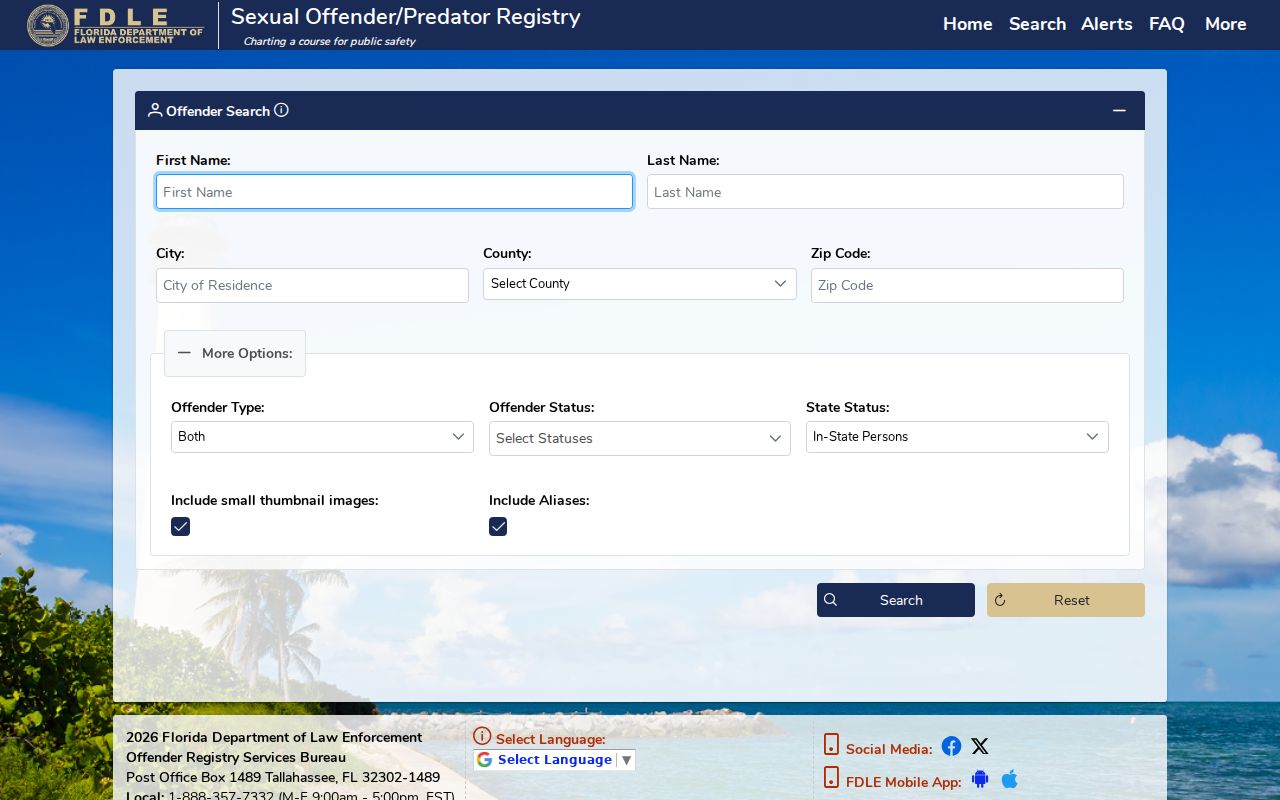
The form shows why county, status, and aliases can make a search more precise than a bare name.
Results include a selection box, picture, designation, status, address, and address-source information. View Flyer creates a printable view, while Track Offender supports notice of reported changes. A selected-record PDF is limited to 25 entries at once. For a longer county list, use the public data file. Always return to the live profile before relying on a saved copy.
Nassau County Neighborhood Radius Search
The FDLE Neighborhood Search asks for an address, city, ZIP code, and radius. It is the direct option for checking around a home, park, or route. A county list answers a different question by returning the whole jurisdiction.
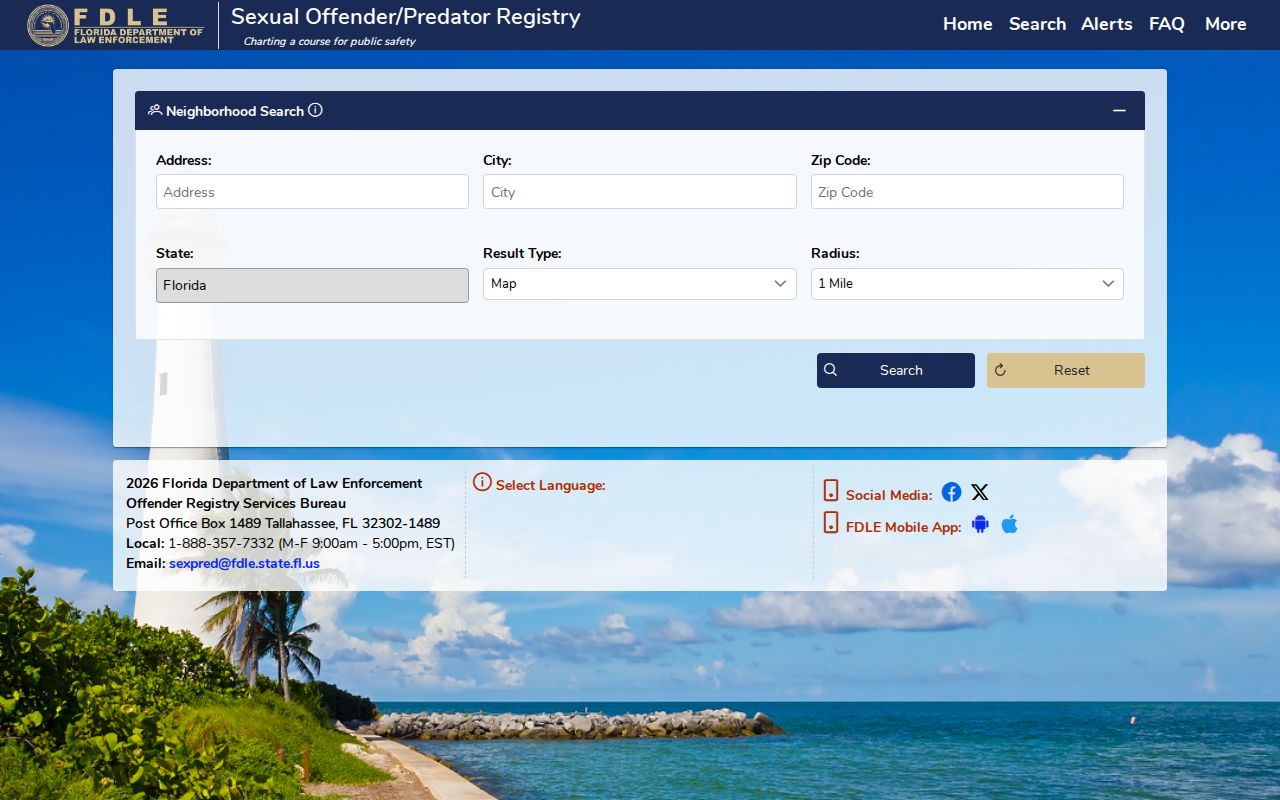
Read map points with profile status and address-source information. A confined, transient, or absconded status may not behave like an ordinary residence.
What a Registry Profile Shows
An FDLE profile joins identity, legal designation, location, offense, and reporting data. Not every field is populated, and parts may update on different cycles. The source and date for an address can be as important as the address itself.
| Name and Aliases | Name, Florida designation, aliases, and birth information. |
|---|---|
| Photo and Description | Photograph, race, sex, height, weight, hair, eyes, scars, marks, and tattoos where reported. |
| Registered Address | Current, temporary, or transient address, map, source, and update details. |
| Offense and Statute | Qualifying offense, jurisdiction, statute, and conviction information. |
| Other Public Fields | Vehicles, vessels, aircraft, licenses, and internet identifiers when public and populated. |
| Registration Status | Released, supervised, confined, absconded, deceased, deported, or other shown status. |
The FDLE registry information home explains the public system and its limits.
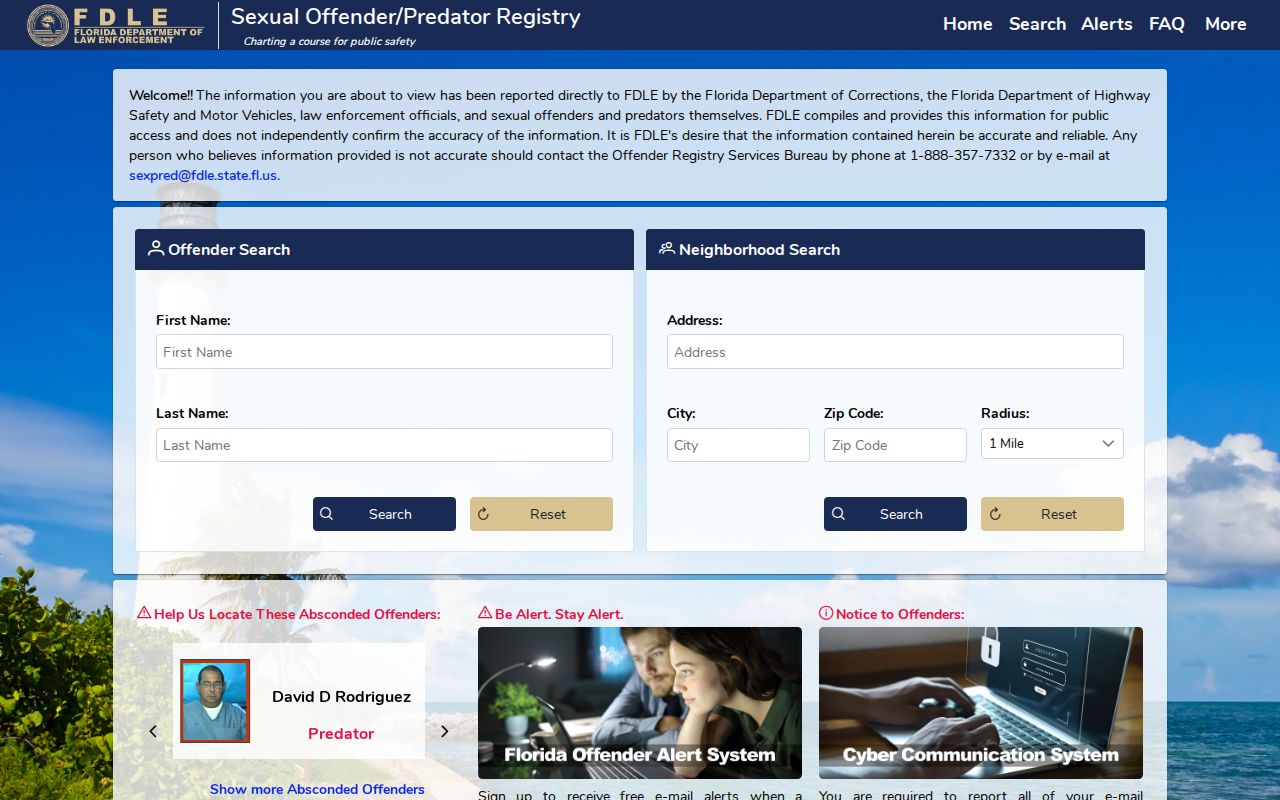
The profile is a statutory registry record. It is not a full court docket, arrest report, or risk assessment.
Some fields appear only when the law makes them public and data has been supplied. Vehicle, vessel, aircraft, license, and internet-identifier fields can vary. An empty field does not prove the category does not exist. A listed offense also does not show the complete case history. The Nassau Clerk's court file is the source for public docket events and disposition details.
Nassau Registry Status Terms Explained
“Released, subject to registration” means the duty continues outside custody. FDC supervision and federal probation identify supervision systems. “Confinement” explains why a home address may be absent. “Absconded” flags a compliance concern that must go to law enforcement, never to personal confrontation.
Sexual offender and sexual predator are Florida legal designations. They are not federal risk tiers. Searchers should preserve the wording FDLE displays instead of converting it into a homemade score.
If a profile seems wrong, note the exact field and profile identifier, then contact FDLE. Do not alter or repost the information as a self-made correction. FDLE compiles reports from several sources and does not independently confirm every fact. A precise report gives the bureau a clear item to trace to the reporting agency.
Registration Requirements and Levels in Florida
Florida does not use a simple public Tier I, II, and III risk table. Duties depend on the qualifying statute, conviction date, designation, and narrow exceptions. Many registrations last for life. NCSO manages local registration, while FDLE publishes the public record.
| Level / Tier | Duration | Verification Frequency |
|---|---|---|
| Sexual offender | Often lifetime, with narrow removal provisions | Periodic reporting based on offense and status under §943.0435 |
| Sexual predator | Generally lifetime registration and notification | Reporting under the predator statute, §775.21 |
| Absconded or noncompliant | Status flagged as applicable | Report facts to FDLE or police; do not confront |
| Confined, deceased, or deported | Retained as the law requires | Status explains why a normal residence may not appear |
Nassau Alerts Across Georgia's Border
FDLE profiles include Track Offender tools for reported changes. Nassau County also touches Georgia, so a Florida-only location search may be too narrow for residents near the state line.
The Department of Justice National Sex Offender Public Website searches participating jurisdictions in one cross-state layer.
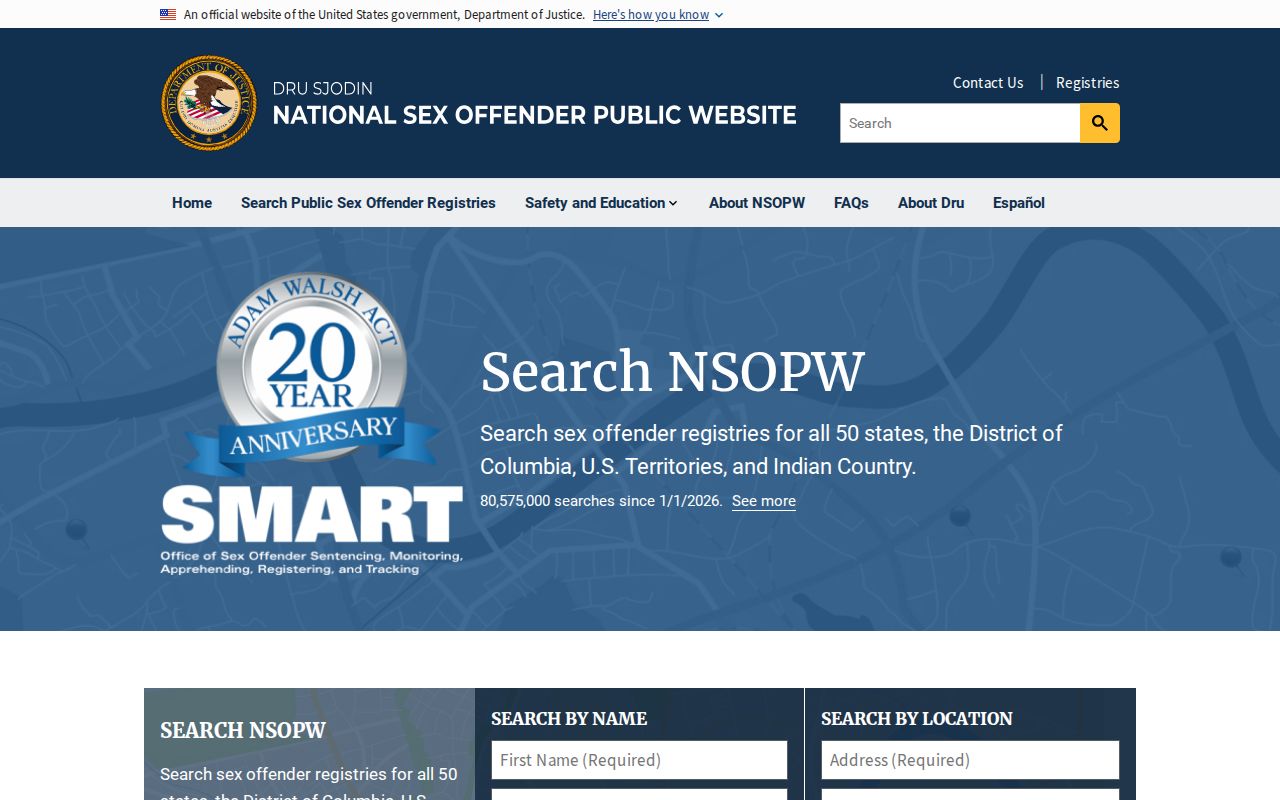
NSOPW adds geographic reach, while FDLE remains the controlling source for a Florida profile.
Correcting Nassau Registry Information
When a profile appears inaccurate, record the exact field, the profile identifier, and the date viewed. Contact FDLE's registry bureau at 1-888-357-7332 on weekdays or sexpred@fdle.state.fl.us. The bureau can trace the disputed item to its reporting source. A suspected failure to register or update an address should instead be reported to NCSO or the law-enforcement agency with jurisdiction. Do not approach the listed person or publish an altered version of the state record.
Lawful Use and Community Notification
Use registry records for awareness and safety planning. Report an apparent data error to FDLE at 1-888-357-7332 on weekdays or sexpred@fdle.state.fl.us. Report suspected noncompliance to law enforcement. Confirm NCSO registration appointments through headquarters at 77151 Citizens Circle, Yulee, 904-225-5174.
Misuse is illegal: Florida law prohibits securing payment through registry data, knowingly publishing false public-record information, or altering it to misrepresent the record. Do not harass, threaten, intimidate, or confront a registrant or household.